

Jamie Silvonek: A child in the adult system

Explore the case of Jamie Silvonek, a child prosecuted as an adult, and understand the profound impact of such decisions on young lives and the pursuit of justice. Her story highlights critical flaws in the system and the urgent need for reform.
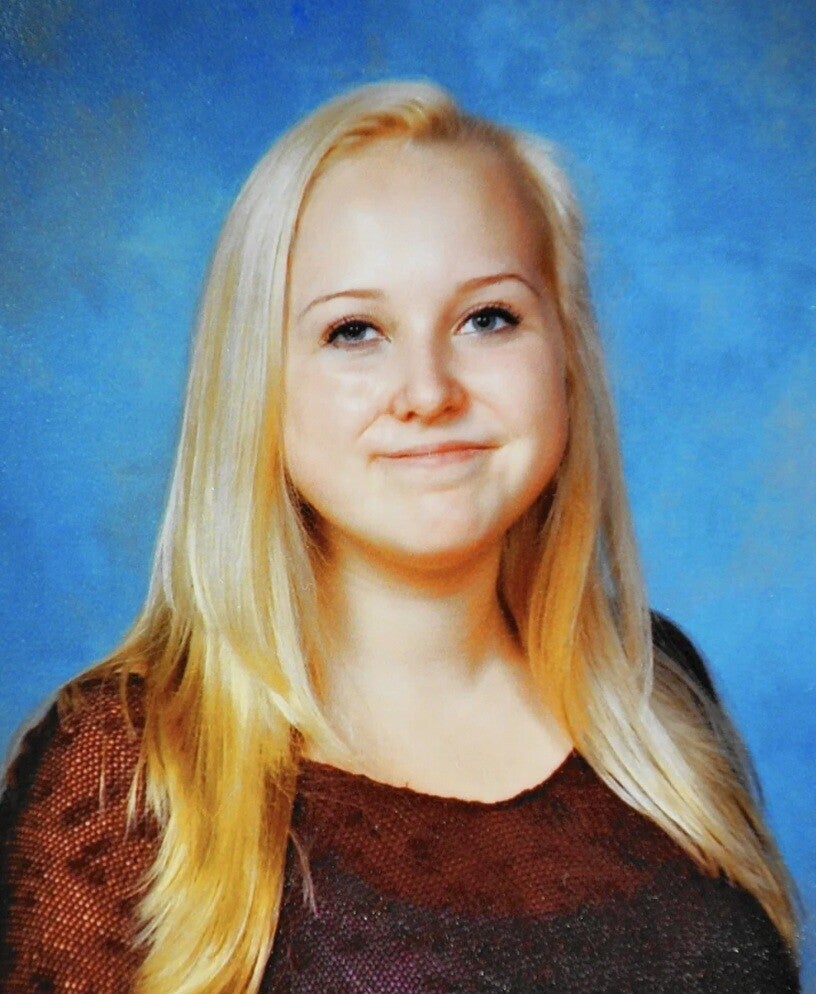
The story of Jamie Silvonek
At just 14 years old, Jamie Silvonek found herself entangled in a system ill-equipped to handle the complexities of her situation. Her abusive 20-year-old boyfriend murdered her mother, and despite her age, Jamie was charged in adult court for her involvement. Her request to be transferred to juvenile court was denied, leading her to accept a plea deal resulting in a 35-year to life sentence—ten years beyond the statutory minimum. Jamie is now one of the youngest women ever incarcerated at SCI Muncy.

Unjustly denied a child's right
Jamie has never denied her involvement in her mother’s killing and has repeatedly acknowledged the grievous loss her death caused, for her family, friends and community. However, as Marsha Levick, co-founder and Chief Legal Officer of Juvenile Law Center, stated, "Jamie was barely 14, on the cusp of adolescence, and was prosecuted as an adult in a system ill-suited to address her individual culpability, emotional and psychological immaturity or her developmental path toward adulthood. With no prior delinquent or criminal record and a sterling academic record at her middle school, Jamie was unjustly denied the opportunity to be treated as the child she was, in the youth justice system.”
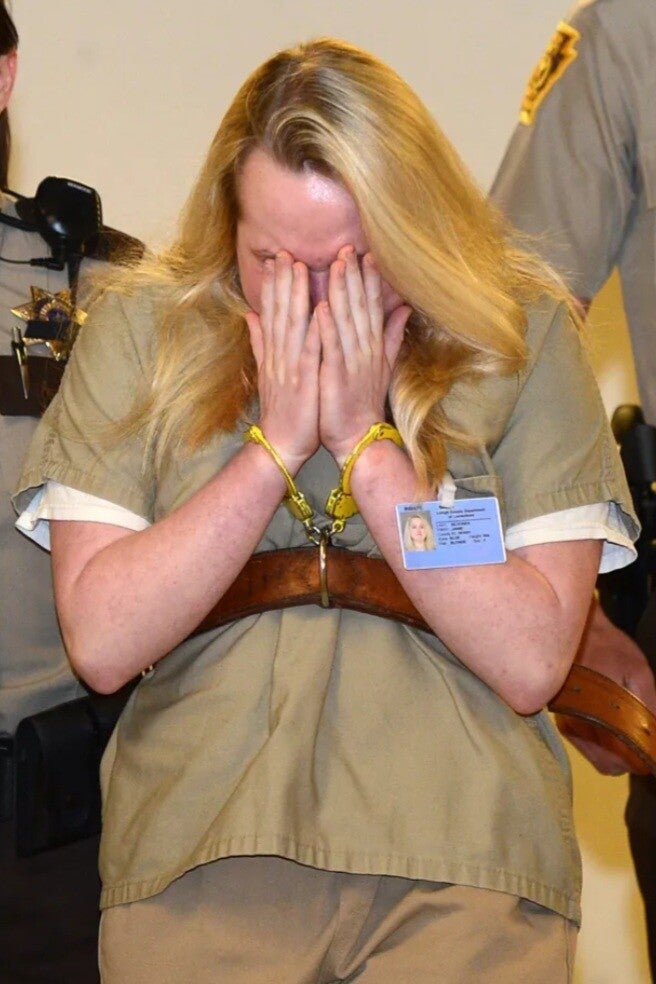
The lasting impact of adult prosecution on children
Annie Ruhnke, Director of Mitigation at Youth Sentencing and Reentry Project, highlighted the profound tragedy: “Jamie will suffer for the rest of her life for the decisions she made when barely 14 years old, as will the rest of her family. While it's easy to focus only on the tragedy at the center of this case—the loss of Cheryl Silvonek—it is crucial to recognise the ongoing suffering and the long-term consequences of prosecuting children as adults. This approach disregards their developmental stage and fails to provide pathways for rehabilitation, ultimately leading to lifelong repercussions for both the individual and their families.
"Jamie was unjustly denied the opportunity to be treated as the child she was, in the youth justice system."
Marsha Levick, Co-founder and Chief Legal Officer of Juvenile Law Center

Jamie's Interview with Jane Wong
Editor-in-Chief of Bellingham Review
Jane Wong: I must have underlined every single line as I read Marginal Verse for the first time. Each line is insistent and full of visceral imagery. I felt your words in my gut. Indeed, so much of your imagery is bodily (you start the first poem with "So long since I've been touched/my nerve endings mistake fabric for flesh"). Can you speak to how you arrive at your imagery? What is your process for creating such felt words?
Jamie Silvonek: Wow, what an excellent question! It's a bit of a challenge for me to describe how I arrive at my imagery because much of it occurs just beneath my consciousness awareness. Sometimes a line or an image will spontaneously come to me, and then I attempt to construct a poem around it by interrogating what the image represents. Often, there will be a specific moment, memory, feeling, or thought that I'd like to convey in a poem. I roll the subject around in my brain, welcoming random associations that I can try to translate into poetry. For me, there is often a dreamlike, emotive quality to my writing process. I tend to navigate the beginning stages of writing a poem by feeling and sensing. After I get the skeleton of a poem down, I then become more cerebral and critical of what I'm writing and what it is that I'm trying to express.
JW: Each and every poem feels necessary in this collection. What was the process of making this book like for you? How did it begin and what was your editing process like?
JS: The process of creating this book was simultaneously healing and terrifying. I started writing the poems that appear in Marginal Verse when I was about 16, during a very dark period of my life. I had been incarcerated for about 2 years at that point, and I was only just beginning to process my feelings of guilt, grief, self-loathing, and shame. I was very isolated, both by the conditions of my confinement and by my sense of hopelessness. Writing poetry was an act of survival; it provided me with a means to channel everything that I was carrying, to order the chaos in a way that wasn't self-destructive. In poetry, I found a safe space to metabolize my trauma. Writing these poems was life-sustaining, giving me a sense of purpose and hope for the first time. I started writing poetry solely for myself; I didn't consider the possibility of publishing them, let alone the idea that people would be interested in my work. It took a lot of encouragement for me to realize that being vulnerable, putting our work out into the world, is what fosters empathy and creates change. Years later, my friend Ally Ang helped me edit the manuscript and submit it to publishers. Until that point, I had never actually revised or edited my work in any capacity; I thought that the hardest part of writing poetry was the act of writing itself. I tended to abandon poems after I wrote them, believing that they were as good as they were ever going to be. Working with Ally to edit the manuscript, I learned that poems are rarely ever complete, and that it is infinitely more difficult to revise a poem than it is to write one.
JW: What I especially found powerful was how vulnerable your voice is throughout Marginal Verse -- engaging incarceration, violence, mental health, and trauma with such intimate intensity and rawness. Are there particular poems that were more difficult to write than others?
JS: Some poems were definitely more difficult to write than others; many of the poems in Marginal Verse are about violence, incarceration, mental health, and trauma, as you identified. Though these poems were very painful for me to write, it was also a very helpful part of my healing process, a journey I'm still very much on. I genuinely believe that poetry has the power to help us process our trauma and begin to heal. I say this while also openly acknowledging that there are things I haven't yet had the courage to translate into poetry. I hope that one day I will find that courage, because I believe it's important for us to be vulnerable and honest about the darkest parts of ourselves, the worst decisions we've made, the harms we're responsible for. By concealing these things, we're only perpetuating the cycle of violence by keeping ourselves stuck in a place filled with secrets and shame. Choosing to be good to ourselves, other beings, and our planet requires us to be conscious of our capacity to cause harm. And I believe that poetry can help us with this task.
JW: You also write quite a bit about writing itself and what poems can do ("howling as I birth those words"). I'd love to hear what you've been writing now and what poems can do, especially as a vessel for activism.
JS: Only recently have I started to experiment with form, as well as more long-form poems and sequences. I find it funny how I used to dismiss form as constrictive and outdated, because I've since fallen in love! Recently, I've written a sestina, a crown of sonnets, a couple of ghazals, and I'm currently working on a heroic crown, which is definitely a challenge! I've been adhering to rhyme schemes for both the crown of sonnets and the heroic crown, which I've discovered is forcing my brain to think in different ways. I love it! I'm always eager to learn and challenge myself as a writer. I believe that poetry and art in general are incredible instruments for activism; they help us to build community, connect with people who are different from ourselves, and collectively imagine a better world. In my opinion, poetry has a unique ability to foster empathy in comparison to other mediums. Reading a poem allows you to feel what the speaker is feeling, even if you and the speaker have completely different identities, values, and life experiences. The act of both reading and writing poetry is transformative. As someone who is deeply interested in the contradictions of human nature, I believe that poetry forces us to see beyond the good/bad binary. Poems are an attempt to order and ascribe meaning to chaotic, complex, and confusing forces. As a result, they can help us better understand ourselves and each other. I also think poetry has the power to help us actually feel our feelings, to remain tethered to a place of compassion and empathy, to resist the urge to numb ourselves. As a result of numerous factors including my past trauma, my consumption of news media, and the daily violence of prison, I believe that I have been desensitized to suffering. And this is unacceptable. Poetry helps me resist my survival instinct to numb myself by forcing me to confront and feel my emotions. In this way, I believe that poems can help us be more empathetic beings.
Why I deserve to be released from prison 10 years
after pleading guilty to my mother’s murder
by Jamie Silvonek
At 14, I was sentenced to 35 years to life in an adult prison for my role in my mother’s murder. After exhausting all other options, I am seeking commutation of my sentence.
Commutations are extraordinarily rare, especially for incarcerated women. From 1990-2017, no women’s sentences were commuted in Pennsylvania. In 2018, Tina Brosius was the first woman whose sentence was commuted in 28 years. Since 2018, only 10 women have had their sentences commuted.
Despite such daunting statistics, I believe in commutation because I believe that every human being is more than the worst decisions they’ve ever made. I believe in the human capacity for positive change and redemption.
I know firsthand how devastating the consequences of my decisions have been: I’ve lost my mom, the person who took care of me and loved me unconditionally. It is impossible for me to describe what it is like to know that I am responsible for my mom’s death and to live with it every single day.
My mother’s death, and my responsibility for it, have been devastating for my family. My father lost his wife of over 30 years; my brother lost his mother; and my grandparents had to bury their only daughter. Even 10 years later, my family continues to grapple with this devastation. The irreparable harms that result from such a tragedy are never isolated: They ripple outward, altering the trajectory of everyone’s lives. The loss of my mom has affected our entire community.
I will never be able to bring my mom back, fully atone for what I’ve done or repair the harms for which I am responsible. This knowledge has filled me with all-consuming guilt and self-hatred for many years. I didn’t believe that there was a point in continuing to live after causing such irreparable harm to my mom, my family and community. Though I still carry the same guilt, I am immensely grateful that I now cherish my life.
Today, I know that the purpose of my life is to honor my mom and her love for me by becoming a person that she can be proud of.
