


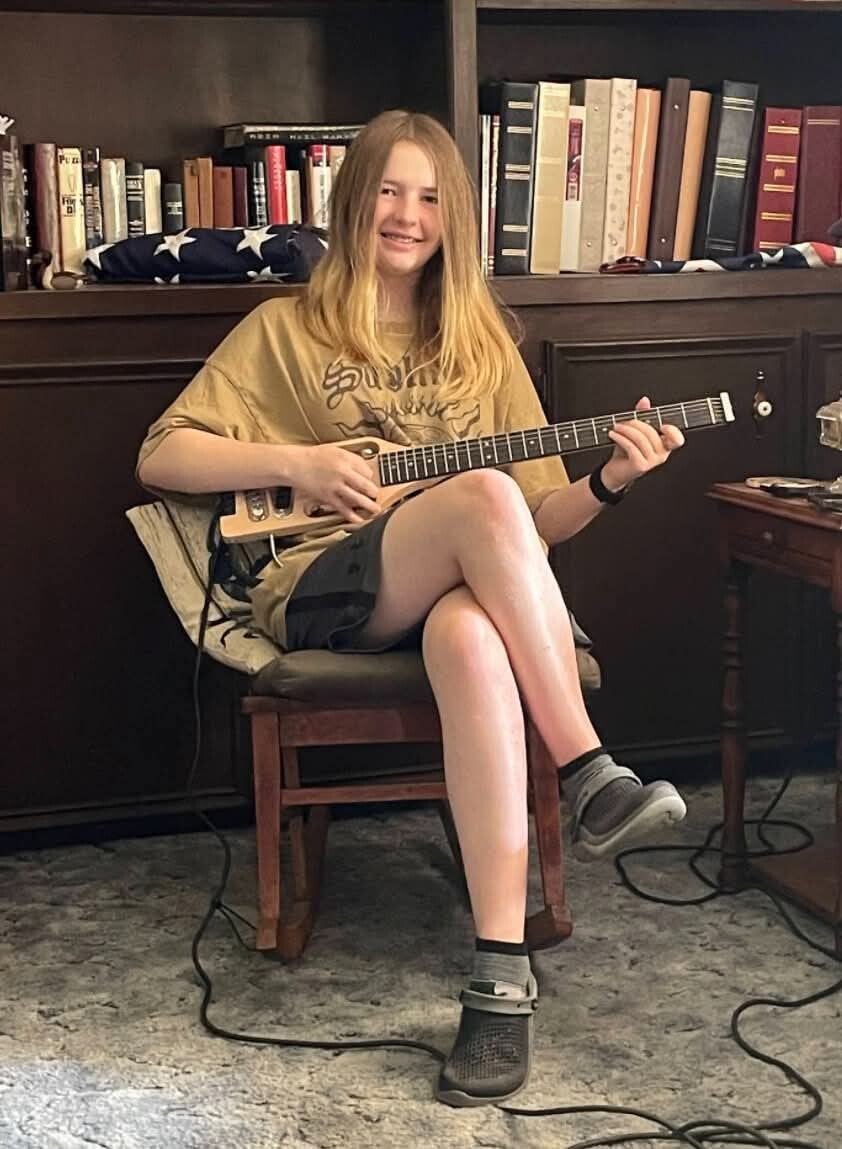
Who is Carly Madison Gregg
Carly was charged as an adult with murdering her mother Ashley Smylie and the attempted murder of her stepfather Heath Smylie. After an appearance at Rankin County Court before Judge Kent McDaniel a $1 million bond was set. 14 year old Carly was then taken to Rankin County Juvenile Detention Center but moved to the adult jail after being charged as an adult.
Carly was held in solitary confinement at the Rankin County Jail in Brandon until her trial which began on September 16th 2024.
Carly Madison Gregg was convicted of murdering her mother, attempting to murder her stepfather and tampering with evidence. Her sentence was described by the prosecution as life imprisonment without the possibility of parole.
However, in August 2026, the Mississippi Supreme Court clarified that Carly's life sentences were not imposed without the possibility of parole.
Despite this clarification, the Mississippi Department of Corrections (MDOC) continues to record Carly's sentence as life without parole.
The discrepancy between the Supreme Court's ruling and MDOC's records remains a matter of ongoing legal concern. The campaign continues to seek clarification and correction of Carly's official sentencing records.
The tragic events surrounding Carly Madison Gregg's case have sent shockwaves throughout the local community. Residents of Rankin County have expressed a mix of disbelief and sorrow, grappling with the reality of such a violent crime occurring in their midst. Community forums and discussions have emerged, focusing on the broader implications of youth violence and the challenges faced by families dealing with mental health issues. As the community seeks to heal, there is a growing call for increased support systems for at-risk youth and educational programs aimed at preventing similar tragedies in the future.

Carly Madison Gregg was born on April 23, 2009,to parents Ashley and Kevin Gregg.
A bright and affectionate child, Carly quickly embraced the role of big sister when her younger sibling, Natalie, was born on June 20, 2012. Their bond, though brief, was filled with love and care—especially after Natalie was diagnosed with a rare genetic disorder shortly after birth.
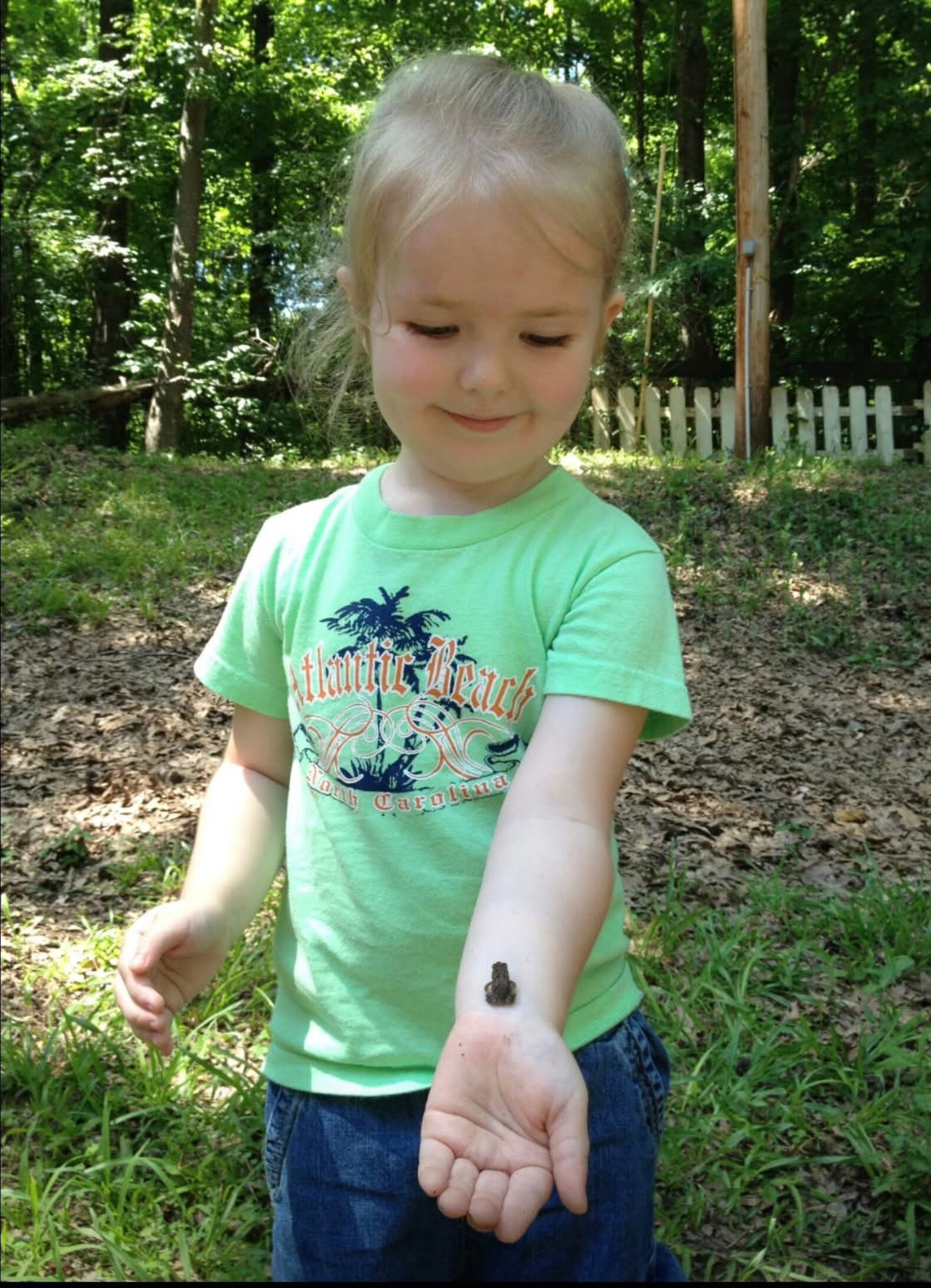

In the wake of Natalie’s diagnosis and her parents’ divorce
Carly, her mother Ashley, and baby Natalie moved to Vicksburg so Natalie could be near the medical services she needed. Carlys maternal grandparents Robert and Vicki Breland moved to Vicksburg shortly afterwards. Together, the family created a nurturing and supportive environment centered on caring for Natalie and recovering from the family’s emotional upheaval. Tragically, Natalie passed away on September 9, 2013, at just 18 months old, a devastating loss that left a lasting impact on Carly and her family.

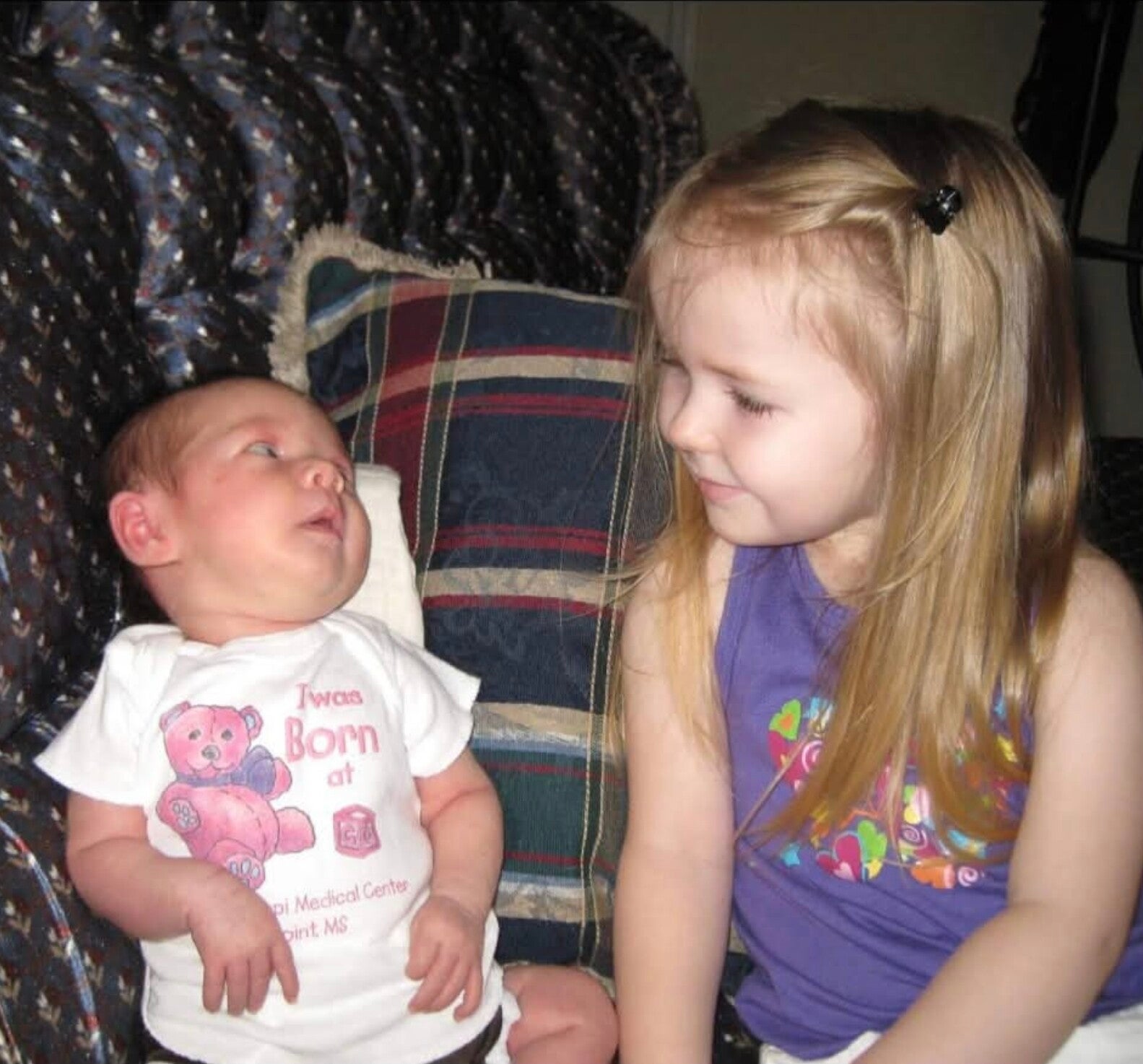
In time
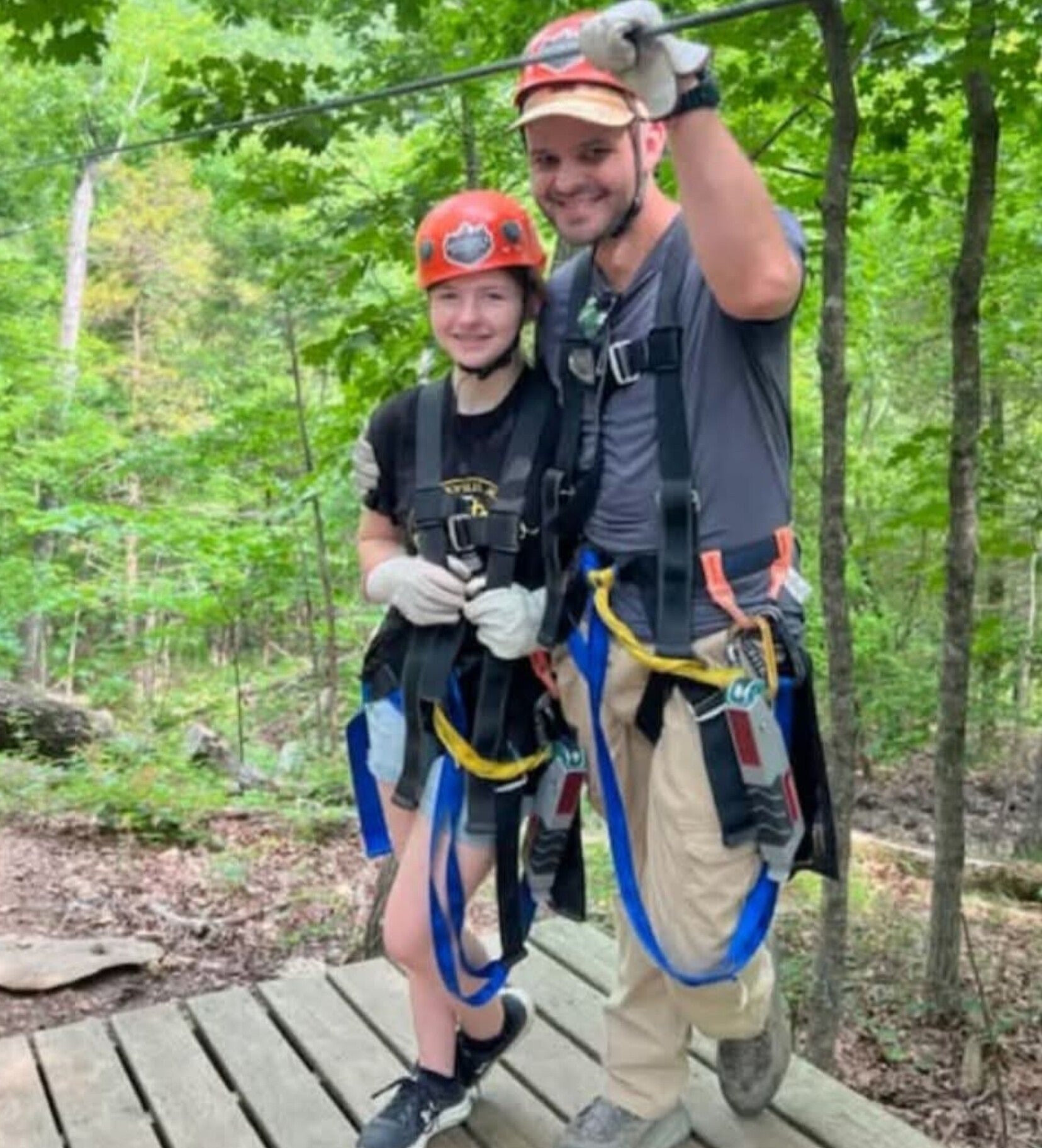
Carly’s life grew to include a close bond with her stepfather, Heath Smylie, whom Ashley later married. Their family life, shared with golden retrievers Wyatt and Finn, was rich with warmth, joy, and a shared love for animals and the outdoors. Carly maintained contact with her biological father through court-ordered visits, though she increasingly expressed discomfort with those visits as she matured.


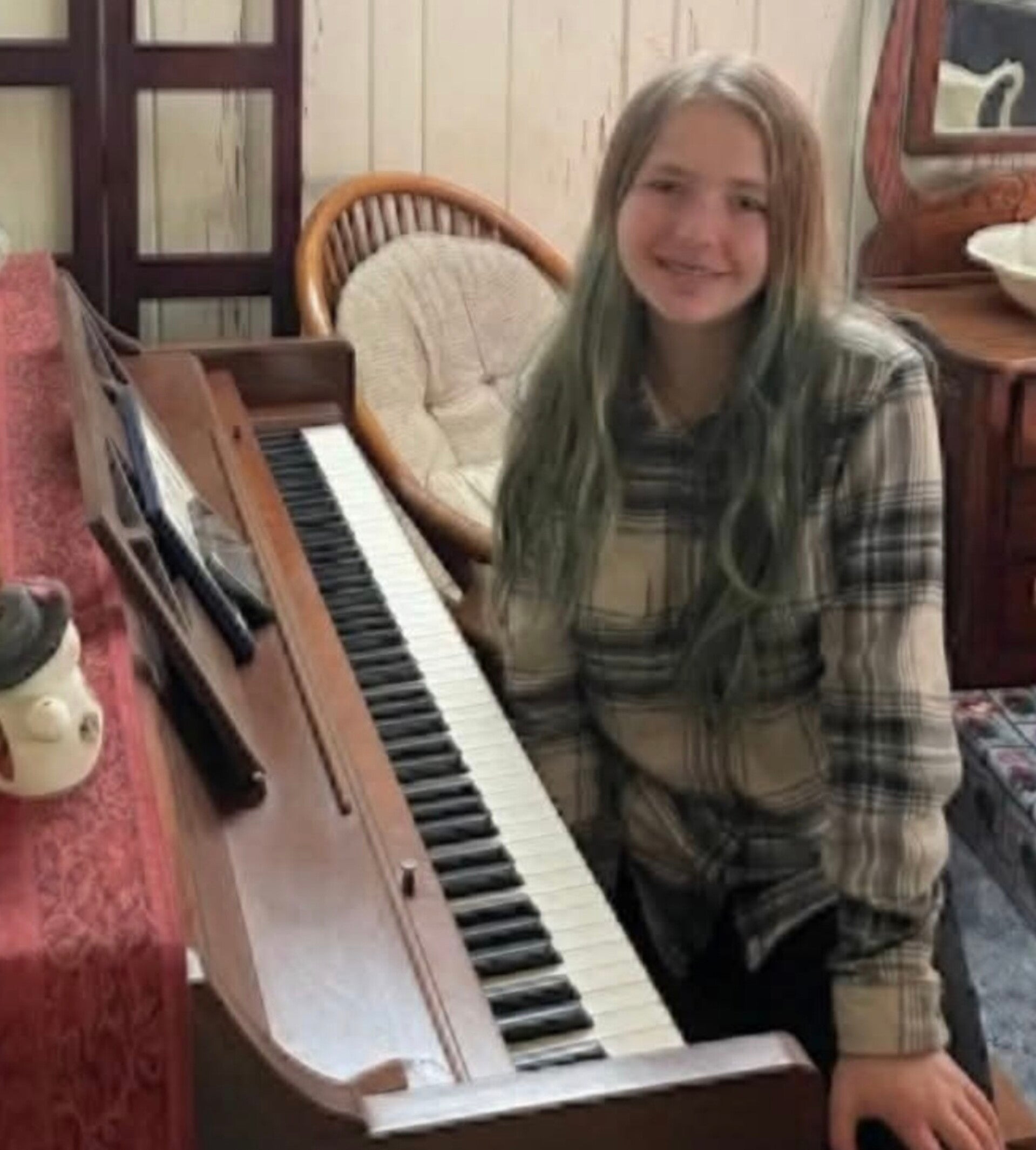
Carly is a gifted student and a compassionate soul
Her talents spanned academics, music, and literature. With an early love of reading and an aptitude for learning, she excelled far beyond her years—skipping the third grade and earning a score of 30 on the ACT at just 13 years old. She played multiple instruments, earned numerous academic accolades, and was once named Student of the Year at her middle school. Her intelligence was matched by her emotional sensitivity and deep empathy.



Despite her achievements
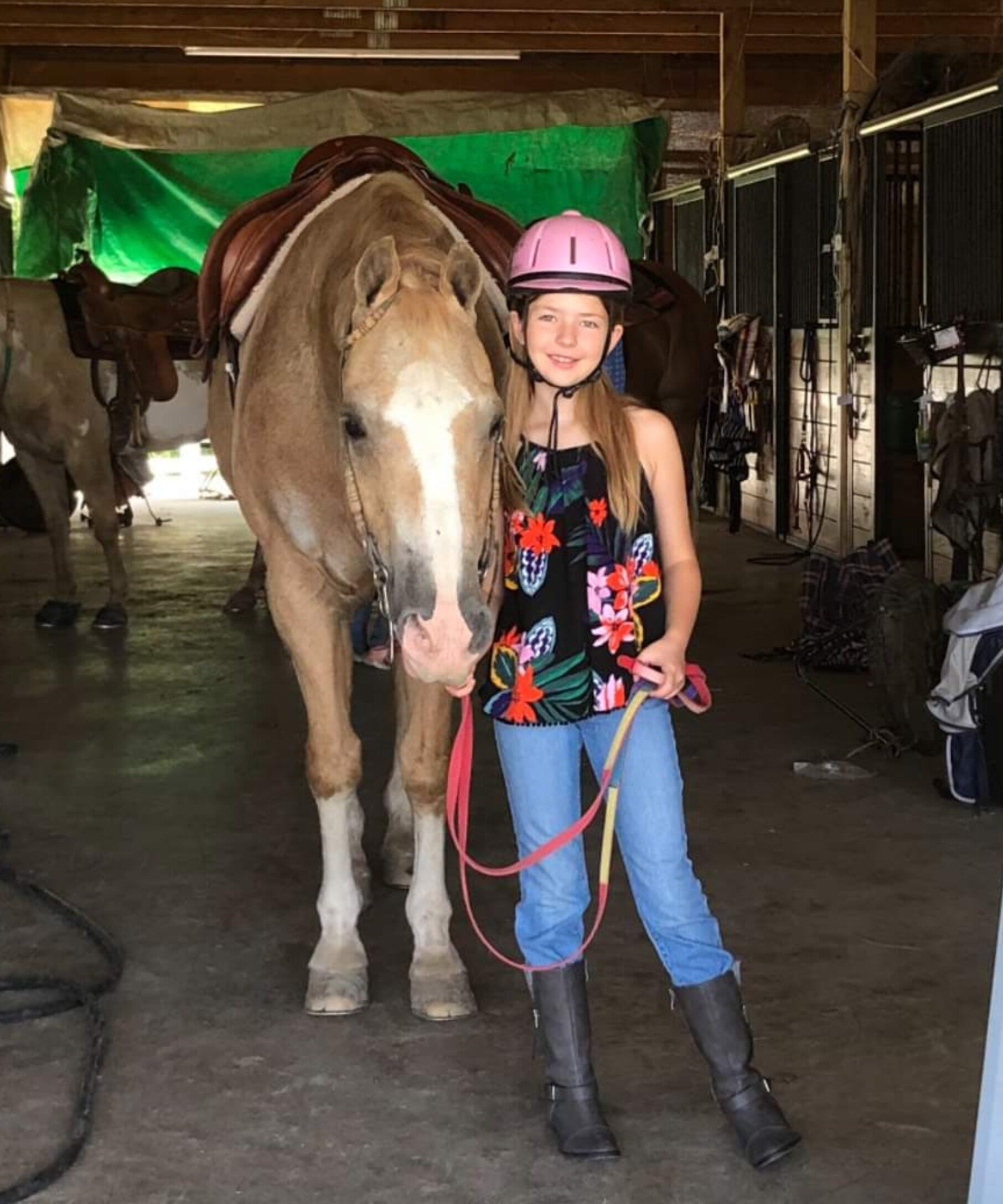
Carly battled mental health challenges from an early age. She and her mother pursued various treatments, including therapy and equine therapy, in efforts to support Carly’s well-being. Mental illness had long roots in Carly’s family history, including bipolar disorder, depression, and schizophrenia. In early 2024, Carly had recently discontinued Zoloft and had begun taking Lexapro, without a mood stabilizer, a medication known to worsen bipolar symptoms in some patients.


Carly's Journal
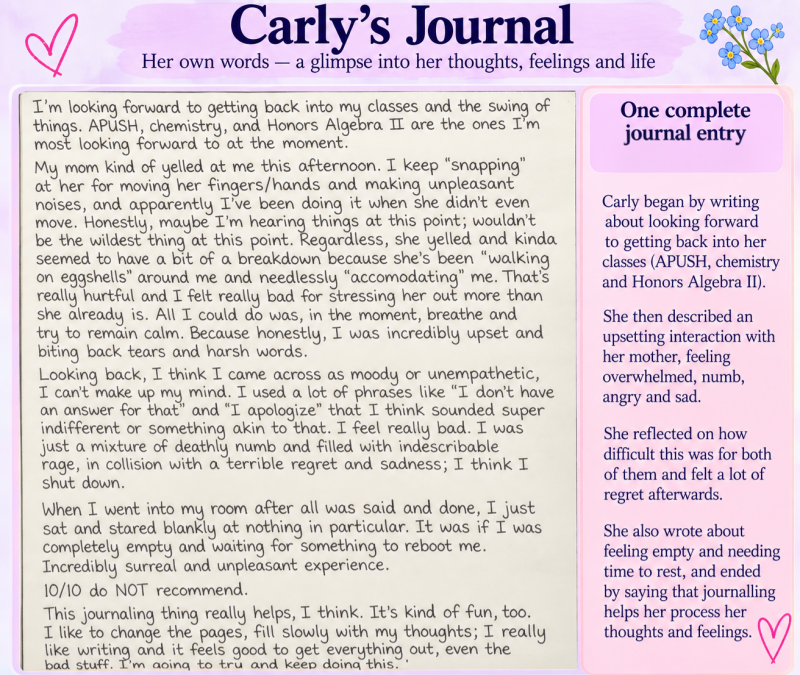
Carly's journal offers a personal insight into her life, thoughts and emotional wellbeing before the tragedy of 19 March 2024.
In an entry dated 12 March 2024, Carly wrote about her school achievements, her enjoyment of reading and the positive impact of therapy. She also described periods of emotional distress, feelings of numbness and regret, and an experience she believed may have been a psychotic break.
Her writing reveals a young person experiencing both ordinary teenage life and significant emotional difficulties.
These journal entries cannot establish a clinical diagnosis or explain exactly what happened a week later. However, they provide important personal context that deserves consideration alongside the testimony and evidence presented at trial.
Understanding Carly's story means looking beyond a single event and considering the young person she was, the challenges she described and the support she was receiving.
Carly’s Journal — Her Struggles During Therapy
Written on 12 March 2024, while Carly was receiving mental health counselling, this journal entry provides a personal account of her thoughts and experiences just one week before the tragedy.
Carly wrote positively about therapy, her achievements at school and her love of reading. However, she also described an experience she believed may have been a psychotic break, including hearing a voice in her head.
Significantly, Carly's counsellor, Rebecca Kirk, testified that Carly had not reported hearing voices during their counselling sessions. Yet Carly's own journal records her describing precisely such an experience. At the end of the entry, she wrote about being unsure whether to bring her journal to Mrs Kirk the following day.
This distinction is important. What Carly privately recorded about her mental health was not necessarily the same as what she disclosed during therapy. Her writing offers a valuable glimpse into the struggles she was experiencing at the time, even while she described therapy as helpful.

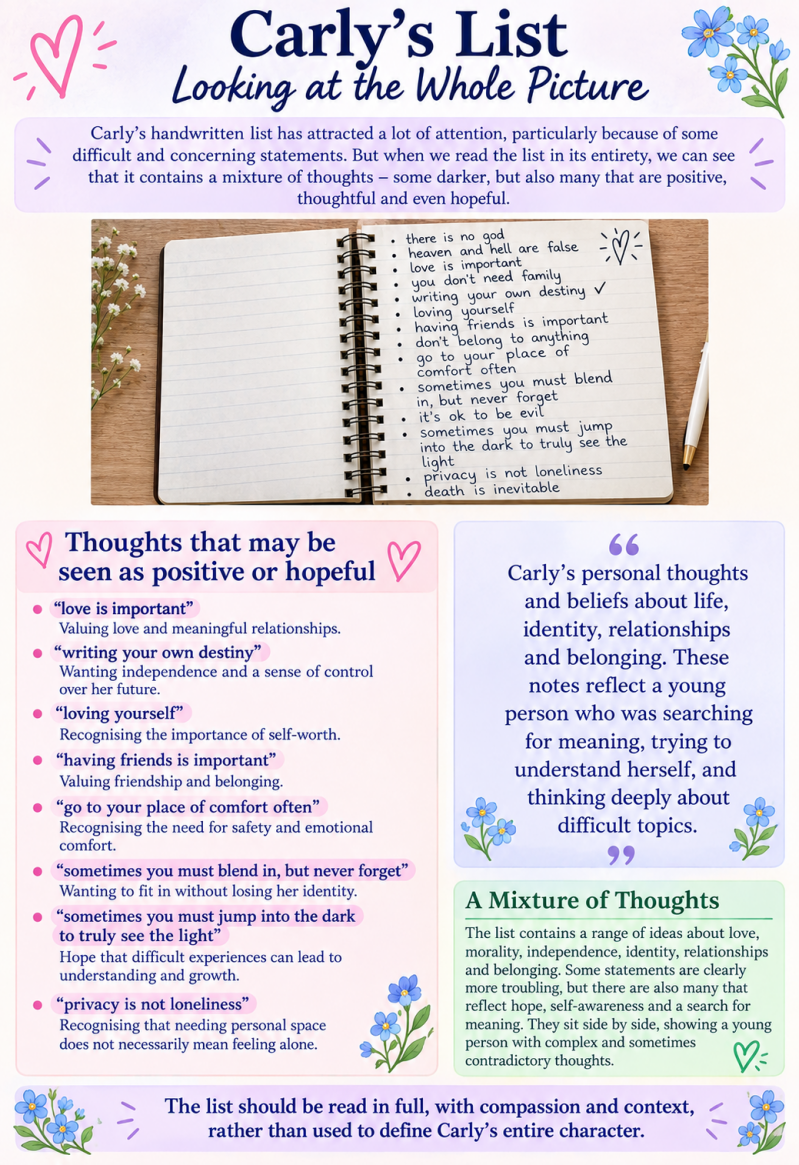
Carly’s List — Looking at the Whole Picture
The handwritten list presented during Carly's trial has understandably attracted considerable attention. For many people, it is difficult to understand, particularly when viewed without the wider context of Carly's life and mental health.
But Carly was more than the list, or the events of one tragic day.
She was a 14-year-old girl who had been experiencing mental health difficulties and was receiving treatment. Her journal reveals a young person who enjoyed learning, loved reading, valued her therapy and was trying to make sense of feelings and experiences she found frightening and confusing.
In her own words, Carly described hearing a voice and wondering whether she had experienced a psychotic break. These private reflections remind us that there were aspects of her inner world that may not have been fully understood by those around her.
The list deserves to be considered seriously, but it should not be allowed to define Carly as a person or erase the difficulties she was experiencing.
We cannot know from the list alone what Carly was thinking or feeling when she wrote it. What we can do is consider it alongside her journal, her treatment history and the testimony presented at trial.
Seeking to understand Carly's state of mind is not about diminishing the tragedy or the loss of her mother. It is about recognising that Carly, too, was a child whose mental health and circumstances deserve careful, compassionate consideration.
On March 19, 2024
in an unexpected and heartbreaking event, Carly fatally shot her mother shortly after they returned home from school. She also attempted to shoot her stepfather, Heath Smylie, who survived. Heath later testified that Carly appeared frightened, disoriented, and completely detached from reality, describing her as looking as though "she had seen a demon."
In the aftermath, Carly fled in terror, scaling her backyard fence and eventually flagging down a police officer. She was arrested but not read her Miranda rights, denied access to family, and appeared in her initial court hearing without adult representation. Bail was set at $1 million and later revoked.
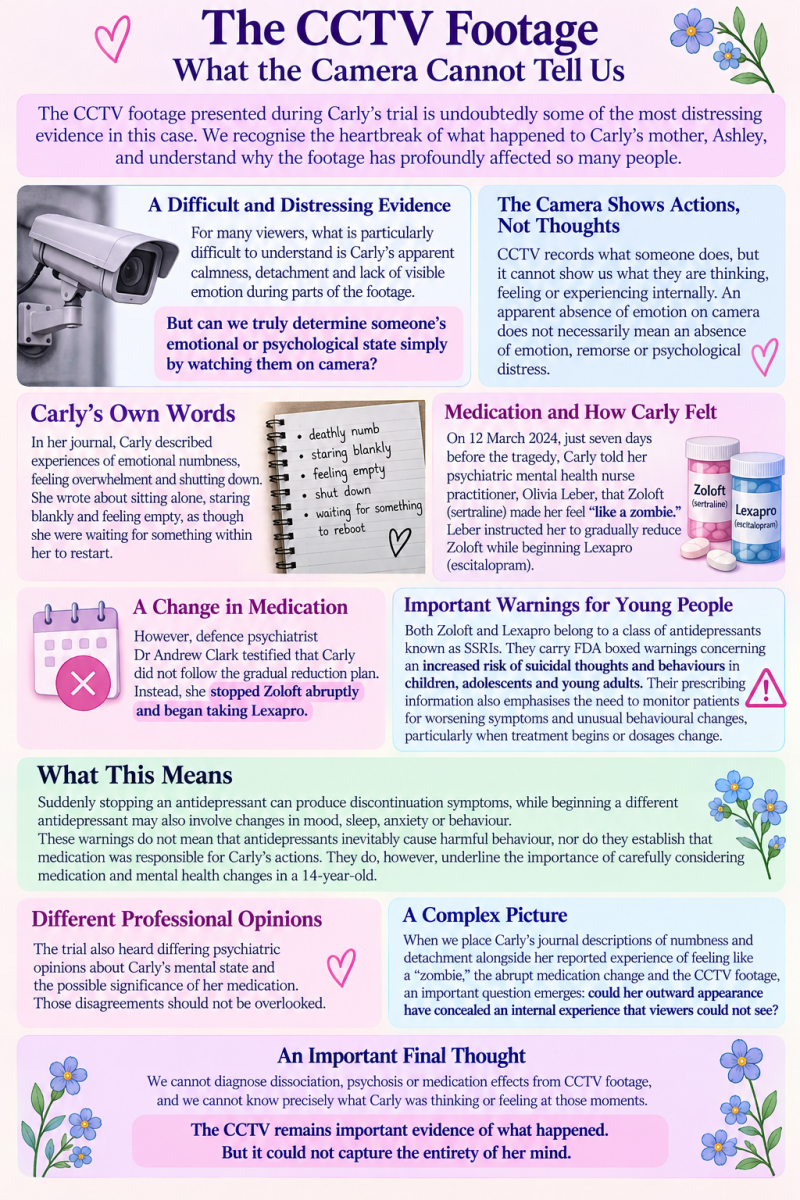
The CCTV Footage — What the Camera Cannot Tell
The CCTV footage presented during Carly Gregg's trial is undoubtedly some of the most distressing evidence in this case. We recognise the heartbreak of what happened to Carly's mother, Ashley Smylie, and understand why the footage has profoundly affected so many people who have watched it.
For some viewers, what is particularly difficult to understand is Carly's apparent calmness, detachment and lack of visible emotion during parts of the footage. These images have contributed to harsh judgements about her character and assumptions about what she may have been thinking or feeling.
But can we truly determine someone's emotional or psychological state simply by watching them on camera?
There is important context that deserves to be considered.
Carly's Journal — Emotional Numbness and Detachment
In her own journal, Carly described experiences of emotional numbness, feeling overwhelmed and shutting down. She wrote about sitting alone, staring blankly and feeling empty, as though she were waiting for something within her to restart.
These descriptions are significant because they suggest Carly had experienced feelings of detachment and emotional emptiness before the events of 19 March 2024.
Her private writing offers an important perspective on her emotional wellbeing, including experiences that may not have been fully apparent to those around her.
Although these entries cannot establish her psychological state at the time of the tragedy, they provide relevant context when considering her apparent lack of visible emotion in the footage.
The Medication Changes Before the Tragedy
The trial also heard evidence concerning Carly's experiences with antidepressant medication and a significant change in her treatment shortly before the tragedy.
On 12 March 2024, just seven days before the events, Carly reportedly told her psychiatric mental health nurse practitioner, Olivia Leber, that Zoloft (sertraline) made her feel "like a zombie."
According to the testimony described at trial, Leber instructed Carly to gradually reduce Zoloft while beginning Lexapro (escitalopram). Defence psychiatrist Dr Andrew Clark testified that Carly had not followed the gradual reduction plan. Instead, she had stopped taking Zoloft abruptly and begun taking Lexapro.
This distinction is important.
Abruptly stopping an antidepressant can produce discontinuation symptoms, while beginning another antidepressant may involve changes in mood, sleep, anxiety or behaviour.
Both Zoloft and Lexapro carry FDA boxed warnings concerning an increased risk of suicidal thoughts and behaviours in children, adolescents and young adults. Their prescribing information also emphasises the importance of monitoring for worsening symptoms and unusual behavioural changes, particularly when treatment begins or dosages change.
These warnings do not establish that antidepressants caused Carly's actions. However, they underline why changes in medication and mental health deserve careful consideration, particularly in a 14-year-old already receiving psychiatric treatment.
The trial heard differing psychiatric opinions concerning Carly's mental state and the possible significance of her medication. Those disagreements form part of the evidence and should not be overlooked.
What Could Carly Have Been Experiencing?
When we consider Carly's journal descriptions of emotional numbness alongside her reported experience of feeling like a "zombie," the abrupt medication change and her appearance in the CCTV footage, an important question emerges:
Could Carly's outward appearance have concealed an internal psychological experience that viewers simply could not see?
We cannot answer that question definitively.
CCTV footage cannot establish whether Carly was experiencing dissociation, psychosis, medication-related effects or another psychological state. Nor can we know precisely what she was thinking or feeling at those moments.
But equally, an apparent absence of emotion on camera is not proof of an absence of emotion, remorse or psychological distress.
A person's outward behaviour does not always reveal the complexity of their internal experience.
Looking Beyond the Footage
Nothing in this discussion excuses the violence or diminishes Ashley's life and the devastating loss suffered by those who loved her. Carly was also a 14-year-old child receiving mental health treatment, who had privately described significant emotional difficulties and who had undergone a medication change shortly before the tragedy.
These circumstances deserve to be considered alongside the footage, rather than allowing the most distressing images alone to define her.
Seeking to understand Carly's mental state is not about denying what happened, overlooking the evidence or diminishing the suffering of others.
It is about recognising that understanding a person's actions requires careful consideration of all the available evidence, including their age, mental health history, treatment and personal experiences.
The camera captured Carly's actions. It could not capture the entirety of her mind.
Seeking to understand that distinction is not the same as excusing what happened. It is part of looking at the whole picture with care, compassion and fairness.
Whilst awaiting her trial
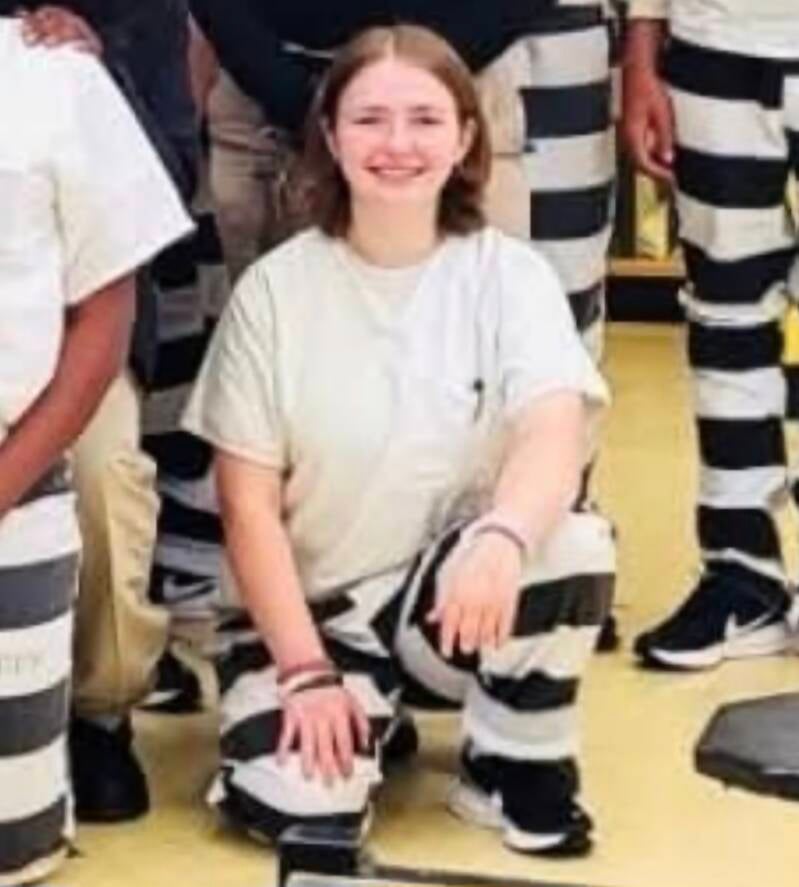
Carly then spent 180 days in solitary confinement, 23 hours a day, at an adult facility unequipped for minors, during which she was exposed to adult inmates and subjected to verbal abuse, conditions that violated established protections for juvenile detainees..

September 2024
Despite her age, mental health history, and the circumstances surrounding the tragedy, Carly was tried as an adult. Following a five-day trial, she was convicted and sentenced to life in prison.
The jury took approximately two hours to find her guilty on all counts. The judge immediately began the sentencing phase of the trial.
The jury took 1 hour 57 seconds to return its decision to sentence Carly to spend the rest of her natural life in prison.
Carly Madison Gregg was convicted. A future date was not set for sentencing to allow time for victim impact statements etc. Carly was entenced immediately to life imprisonment for murder, life imprisonment for attempted murder, and ten years for evidence tampering.
Although her sentence was widely described as life without the possibility of parole, the Mississippi Supreme Court clarified in its August 2026 opinion (paragraph 72) that Carly was sentenced to life imprisonment, not life without parole.
However, questions remain about how her sentence is being recorded and administered by the Mississippi Department of Corrections, which reportedly continues to classify her as ineligible for parole as of October 2026.


Today
Carly’s life is a portrait of brilliance and heartbreak—of promise, pain, and the tragic consequences of untreated mental illness. Her story raises urgent questions about juvenile justice, mental health care, and the systems meant to protect vulnerable children. It is a life still in motion, marked by unimaginable loss, and held in the hope that compassion, understanding, and justice can one day prevail.
💚⚖️🅹🆄🆂🆃🅸🅲🅴 for 🄲🄰🅁🄻🅈 🄶🅁🄴🄶🄶⚖️💛
Appeal History
This section brings together court filings, legal briefs and supporting documents relating to Carly Gregg's appeal before the Mississippi Supreme Court. The original documents are available to download so visitors can examine the legal arguments and proceedings for themselves.
Oral Arguments letters of Support on behalf of Carly Madison Gregg
The day of Oral Arguments on behalf of Carly Madison Gregg at The Mississippi Supreme Court

Oral Argument Decision


Summary of the Mississippi Supreme Court's August 2026 decision
The following graphic provides an overview of the issues addressed in Carly Gregg's appeal. It is an independent campaign summary, not an official court document. The original Supreme Court opinion is available to download above for readers who wish to examine the full ruling.


Request for Rehearing
Following the Mississippi Supreme Court's decision on 20 August 2026, further filings were submitted seeking rehearing. This section brings together the relevant motions, supporting documents and letters, allowing visitors to examine the arguments presented and follow the continuing legal proceedings.
The campaign graphics below summarise the arguments from an advocacy perspective and should be read alongside the original court documents.


